Tailoring the rheological properties of cement-based materials for 3D printing
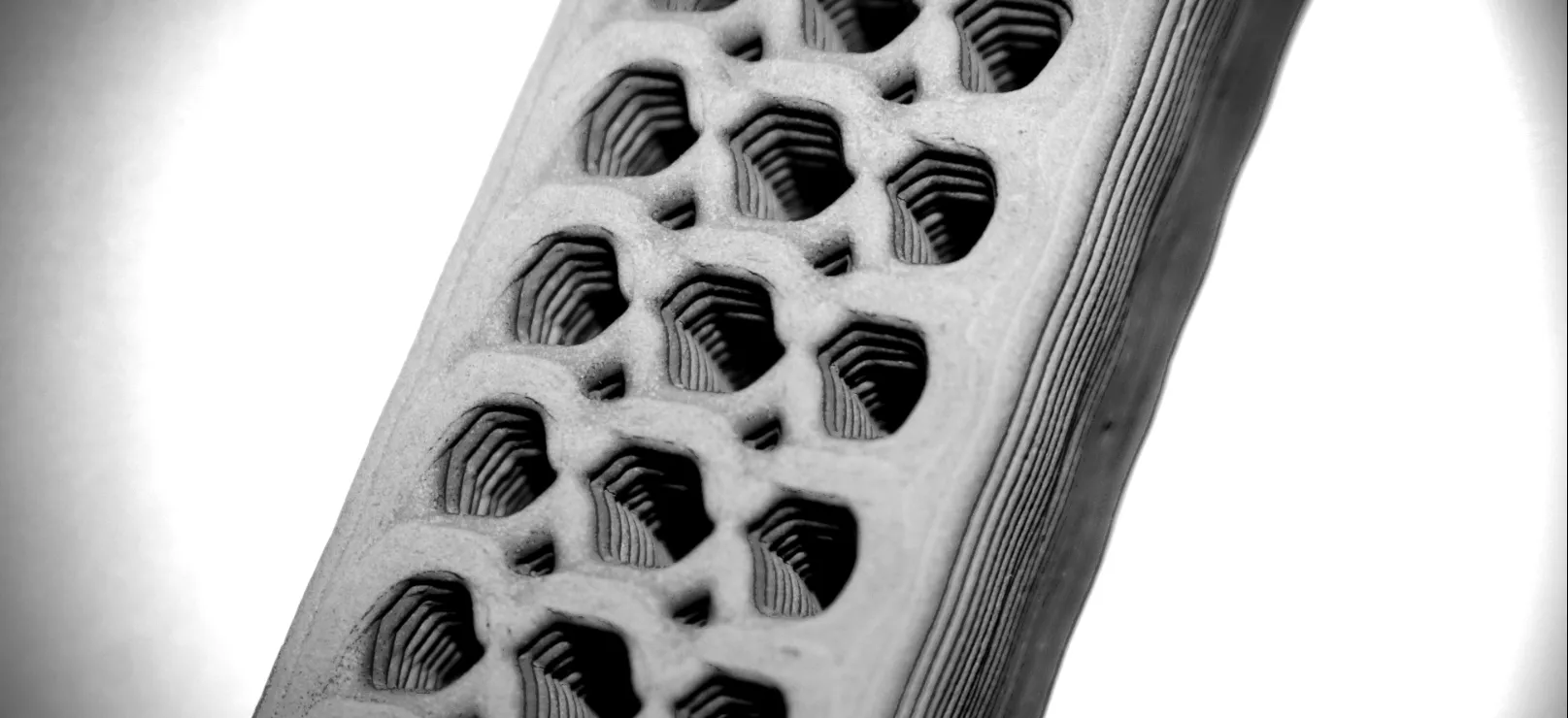
3D concrete printing has the potential to revolutionize the way we construct and repair our infrastructure. One of the major advantages of 3D concrete printing over conventional static formwork casting is the elimination of the use of formwork and vibration typically necessary for consolidation. This can reduce material and labor costs due to formwork, reduce material waste, cut construction time, and reduce human error. At the same time, form-free and vibration-free casting presents a significant materials engineering challenge to achieve the desired performance, serviceability, and aesthetics of the final structure in place. We perform fundamental research to provide needed knowledge for the development of concrete systems specifically tailored for extrusion-based 3D printing applications, where the fresh concrete must exhibit high flowability (low to intermediate viscosity) during the printing process and high rate of structural build-up (increase in static yield stress) immediately after deposition. Recent efforts have been in developing novel processing methods for additives, namely nanoclays and methylcellulose, that can help achieve these seemingly contradictory rheological properties.
Relevant publications:
-
Douba, A., Ma, S., & Kawashima, S. (2022). Rheology of fresh cement pastes modified with nanoclay-coated cements. Cement and Concrete Composites, 125, 104301. doi:10.1016/j.cemconcomp.2021.104301
-
Douba, A., & Kawashima, S. (2021). Use of Nanoclays and Methylcellulose to Tailor Rheology for Three-Dimensional Concrete Printing. ACI Materials Journal, 118(6), 275-289. doi:10.14359/51733129
-
Marchon, D., Kawashima, S., Bessaies-Bey, H., Mantellato, S., & Ng, S. (2018). Hydration and rheology control of concrete for digital fabrication: Potential admixtures and cement chemistry. Cement and Concrete Research, 112, 96-110. doi:10.1016/j.cemconres.2018.05.014